
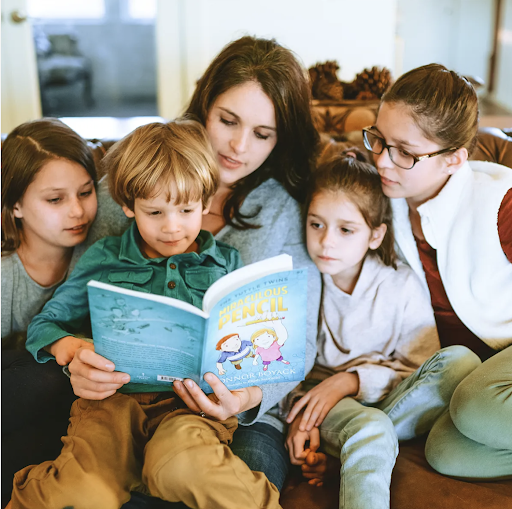
It’s never too early to start teaching your kids about money and economics, but unfortunately, many schools don’t start really diving deep into this subject until junior high or even high school. If you’re on a journey to learn how to teach kids about money, you’ve come to the right place! The Tuttle Twins free market books will help you establish the firm foundation your kids need to be successful in dealing with money. There’s so much more they need to know than just dollars and cents!
Why Kids Need Economic Education Early
First, teaching kids about money involves more than explaining coins and bills. While you can show them how to count cash, they also need to understand why money has value.
For example, children should learn:
-
How markets function
-
Why prices rise and fall
-
What inflation means
-
How incentives influence behavior
Without this knowledge, kids may understand spending but not the system behind it. Therefore, economic education becomes essential.
Many parents feel unsure about teaching economics. However, it doesn’t have to be complicated. In fact, stories and real-life examples make these lessons simple and memorable.
Building a Strong Foundation with the Tuttle Twins
The Tuttle Twins books turn complex ideas into engaging adventures. Through the characters Ethan and Emily, children explore important free market concepts in a fun way.
The Tuttle Twins and the Miraculous Pencil
This book explains how a simple pencil is made. At first glance, a pencil seems ordinary. However, it requires materials and labor from around the world. As a result, children begin to understand global cooperation and trade.
In addition, the story shows how no single person can create everything alone. Instead, markets allow people to specialize and work together.
The Tuttle Twins and the Creature from Jekyll Island
Next, this story introduces inflation and central banking. Rather than presenting dry facts, the book uses an exciting storyline to keep children engaged.
As the twins protect their grandparents’ savings, readers see how inflation affects everyday families. Consequently, children learn that economic policies have real-life consequences.
The Tuttle Twins and the Search for Atlas
In this book, producers stop creating goods and services. As a result, shortages begin to appear. Through this scenario, children learn why responsibility and productivity matter.
Moreover, the story teaches that incentives drive behavior. When rewards disappear, motivation often decreases. Therefore, a healthy market depends on both freedom and responsibility.
The Tuttle Twins and the Messed-Up Market
Finally, this title focuses on entrepreneurship and lending. The twins start a Children’s Entrepreneur Market and loan money to other kids.
However, they quickly discover that lending involves risk. Some borrowers succeed, while others struggle. As a result, children learn about incentives, accountability, and smart decision-making.

Moving Beyond Books: Connecting Lessons to Daily Life
Once your kids understand basic economic principles, you can connect those ideas to real situations.
Teach Needs vs. Wants
For instance, use grocery trips to explain the difference between needs and wants. While food is necessary, certain snacks may not be. Therefore, kids begin to see how choices affect spending.
Link Chores to Earnings
Similarly, connect chores to allowance. When children earn money, they value it more. In addition, they learn that effort leads to reward.
Explain Saving and Interest
You can also demonstrate how savings grow over time. For example, match a percentage of what your child saves. As a result, they see how compound growth works in practice.
Use Games as Teaching Tools
Games provide another opportunity for learning. For example, Monopoly teaches property ownership and budgeting. Meanwhile, Minecraft demonstrates resource management and trade.
Instead of treating these games as pure entertainment, use them to spark conversations about economics.
Making Abstract Concepts Practical
Some ideas may seem abstract at first. However, you can make them tangible with simple examples.
If your child chooses one toy over another, they give up the second option. That is opportunity cost.
If three kids want two cupcakes, that is scarcity.
Because these situations happen daily, they make economic concepts easier to understand.
In addition, workbooks from the Tuttle Twins series reinforce these lessons. As children complete activities, they strengthen their understanding step by step.
Final Thoughts
Ultimately, teaching kids about money requires consistency and patience. However, you don’t need to be an economics expert. Instead, you need simple explanations and the right resources.
The Tuttle Twins books provide both. Not only do they explain free market principles clearly, but they also make learning enjoyable.
As a result, your children gain confidence, financial awareness, and long-term decision-making skills. Therefore, by starting early and using practical tools, you set them up for lasting success.

