
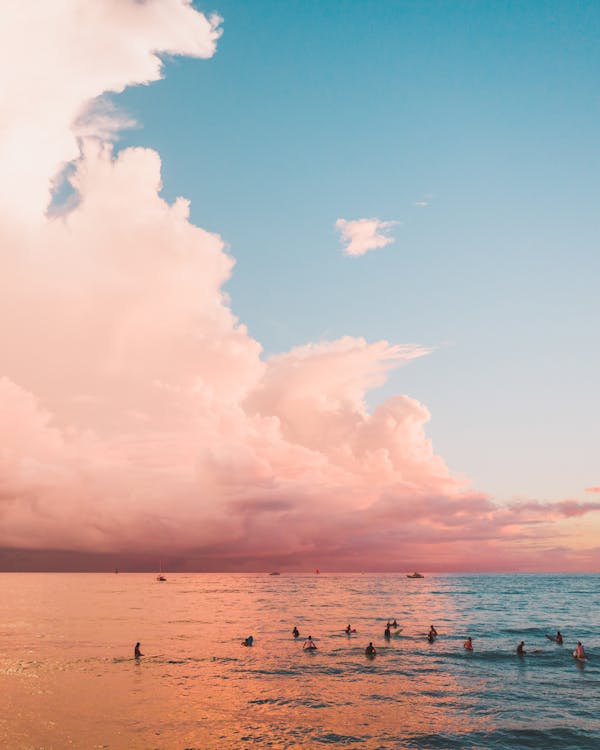
Hawaii remains popular for many reasons. Aloha State’s culture, landscapes, and beaches are extraordinary. We know when to visit Hawaii. No matter the season, the islands are beautiful.
Save some money? Travel during shoulder season. Seeking a humpback whale? Choose a winter or spring vacation.
- Hawaii’s Cheapest Season: Hawaiian Airlines, which offers nonstop flights to Hawaii from the US, Asia, and the South Pacific and inter-island flights, reports that travel to the islands is cheaper in late spring and early fall, in April, May, September, and October.
Hotel rates usually rise during Christmas and New Year’s. Hawaiian Airlines says spring break and summer vacation are other busy times.
- Hawaii’s Best Season: Hawaii has year-round warm weather, with winter temperatures slightly lower than summer temperatures (May to October). According to the Hawaiian Tourism Authority, Hawaii’s beach temperatures average 78 degrees Fahrenheit in winter and 85 degrees Fahrenheit in summer.
From April to October, Hawaii has the least rain. The Hawaii Department of Health says hurricane season in the central Pacific runs from June to November, but massive tropical storms can happen anytime.
- Hawaii’s Busiest Season: Hawaii had over 10 million visitors in 2019, with the most in July (997,872), June (950,931), and December (942,969), according to the Hawaiian Tourism Authority.
Tourism collapsed after the pandemic. Hawaii enforced self-quarantine for visitors. The Safe Travels Program, which ended on March 25, 2022, required all domestic travelers to show proof of a negative COVID-19 test or complete vaccination before entry.
That means Hawaii is rebuilding tourism to pre-pandemic levels. In 2021, 6.8 million people visited the islands, with July (879,551), June (791,053), and December (753,670) being the busiest months, similar to 2019.
Japanese tourists flocked to Hawaii during Golden Week, a seven-day celebration of four Japanese holidays, before the pandemic. Since June 12, 2022, pre-departure testing requirements for international air travellers to the US have been lifted, Hawaii may again see tourism numbers boom during this popular period for Japanese travelers—a time to avoid if you want to avoid the crowds.
Remember the many annual events. The PGA Tour in January, the Aloha Festivals in September, and the Hawaii Food & Wine Festival in October draw tourists to Hawaii.
- Hawaii’s Surfing Seasons: Hawaiian waves are surfable year-round. According to the Hawaiian Tourism Authority, winter waves are too big for beginners to surf, especially on north-facing shores. This is a great time to watch the pros surf big waves.
- Hawaii’s Whale Watching Season: Whale watchers in Hawaii can see humpback whales from December to May. The National Oceanic and Atmospheric Administration’s Sanctuary Ocean Count in January, February, and March is the season’s peak.
Shoulder seasons in May and September offer fewer tourists, lower prices, and good weather.
If you have made up your mind to travel to Hawaii, then make sure you buy international travel insurance right after you book your tickets.
International Travel insurance may always be recommended when travelling overseas to safeguard against losses. Various policies are available in the market and on the internet. You can first go through what is covered in different travel insurance policies. And then shortlist some for a final comparison of travel insurance plans. You can use a travel insurance premium calculator to compare their premiums too. *
* Standard T&C Apply
Insurance is the subject matter of solicitation. For more details on benefits, exclusions, limitations, terms, and conditions, please read the sales brochure/policy wording carefully before concluding a sale.

